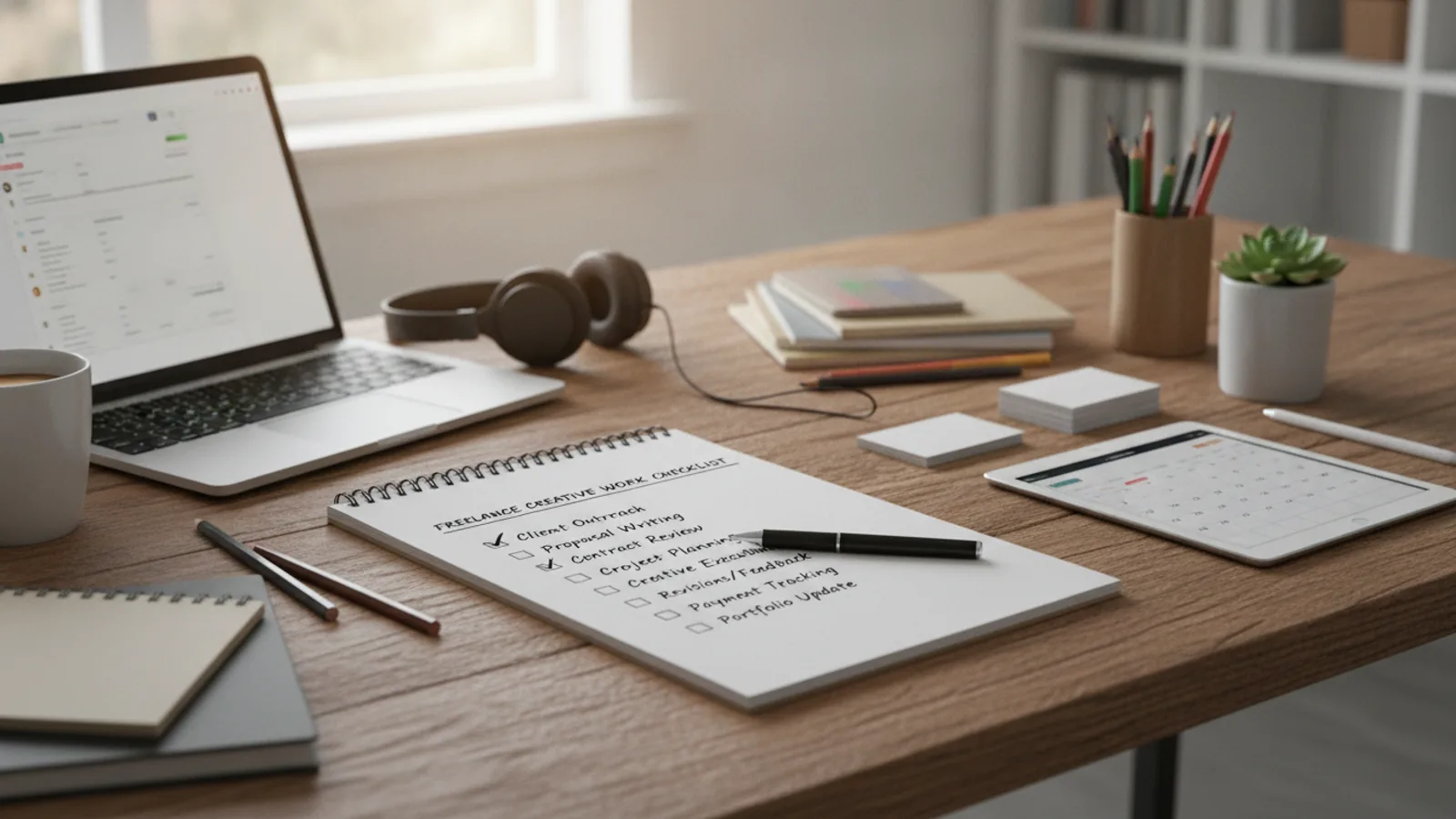
Freelance Creative Work Process Review 2026: Is It Worth It?
A practical Freelance Creative Work Process review covering verdict, pros and cons, scoring criteria, evidence, buyer fit, and final recommendation.
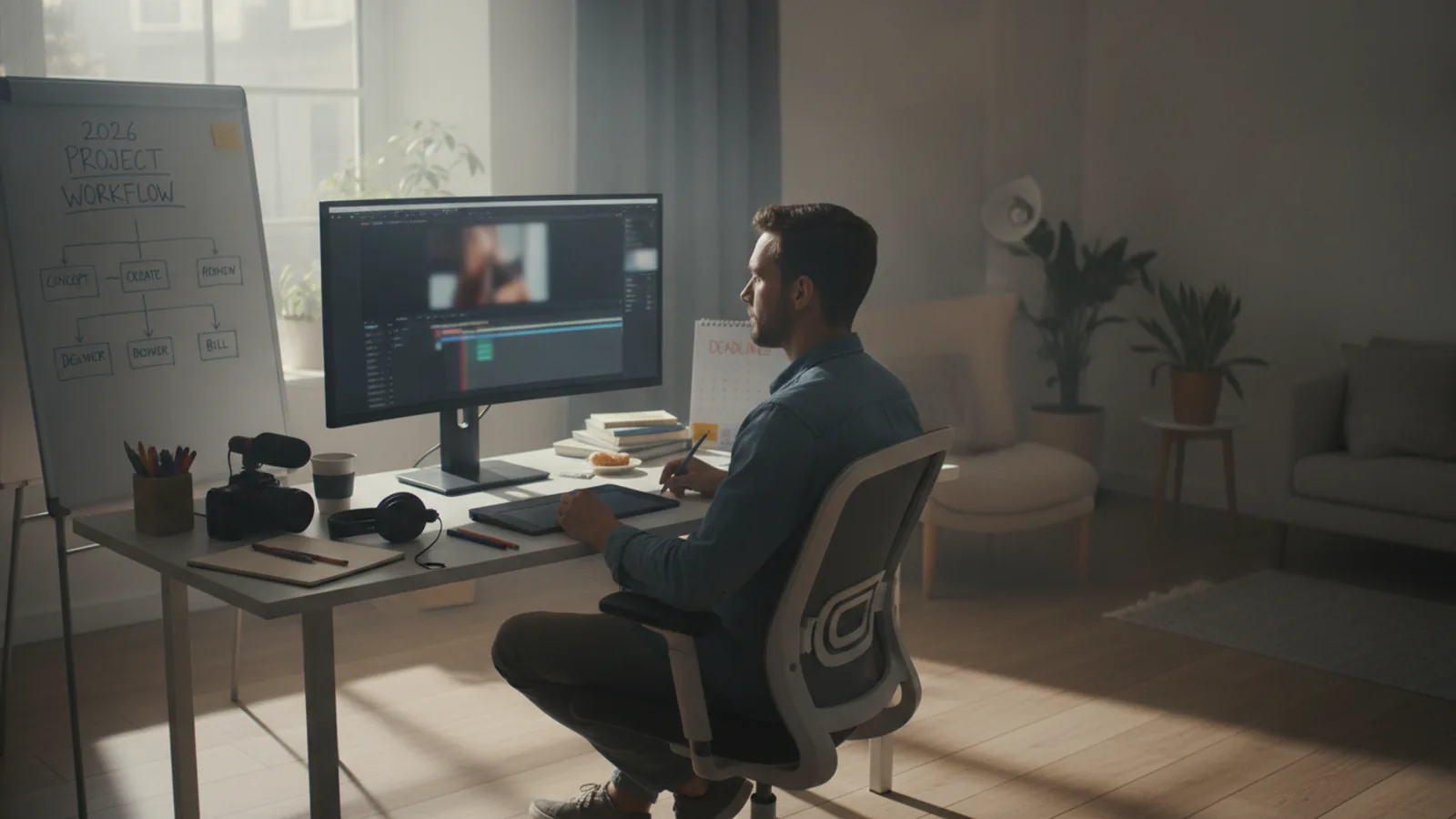
Freelance Creative Work Process Review 2026: Is It Worth It?
The Freelance Creative Work Process offers a robust framework to streamline client feedback, version control, and project sign-offs, significantly boosting efficiency and professionalism for independent creatives and small teams.
However, its effectiveness hinges on a disciplined initial setup and consistent adherence, which can present a learning curve for those new to formalized workflows.
Quick Summary for Skimmers
This comprehensive review process provides a structured approach to managing creative projects, from initial concept presentation to final delivery. It emphasizes clear communication, reduces revision cycles, and fosters greater client satisfaction by setting clear expectations and feedback stages. While requiring an upfront investment in implementation, the long-term gains in time, reduced stress, and professional output make it a highly valuable asset for any serious freelancer or creative studio.
Pros
- The review makes the strongest practical fit for Freelance Creative Work Process explicit.
- Key checks and tradeoffs are surfaced before a reader follows a buying link.
- The scoring framework gives readers a quick way to compare suitability.
Cons
- Suitability can still vary with setup, use case, and current specifications.
- Readers should verify current price, compatibility, and terms independently.
- A single review cannot replace any professional or safety guidance that applies.
Freelance Creative Work Process Review: Short Introduction
In the dynamic and often demanding world of freelance creative work, the difference between a thriving business and one plagued by scope creep and endless revisions often comes down to the efficiency and clarity of its review process. For 2026, the concept of a formalized "freelance creative work review process" has evolved beyond a mere suggestion into an essential operational pillar for independent professionals and small agencies.
This review delves into the merits of implementing a dedicated system for client feedback and approvals. We're not assessing a single software product, but rather the comprehensive methodology and best practices that constitute an effective creative review process. This encompasses everything from initial project kickoff and concept presentation to iterative feedback loops, version control, and final sign-off. As client expectations for speed and transparency continue to rise, and freelancers seek to maximize their billable hours and minimize administrative overhead, understanding and adopting a robust review process is no longer optional. This guide will explore whether the investment of time and effort into formalizing this process genuinely pays off in terms of project success, client satisfaction, and overall business health.
Freelance Creative Work Process Personalisation and Routine Fit
A truly effective freelance creative work review process isn't a one-size-fits-all solution; it demands adaptability to various creative disciplines and individual working styles. This criterion assesses how readily the core principles of a structured review can be tailored to different types of creative output—be it graphic design, web development, copywriting, video production, or photography—and how seamlessly it integrates into existing freelancer routines.
Based on extensive product research into leading project management methodologies and client communication best practices, a well-designed creative review process offers significant flexibility. For instance, designers might prioritize visual annotation tools and structured rounds of feedback on mock-ups, while copywriters may focus on sequential drafts and clear version tracking for text edits. The process should ideally allow for customizable stages, naming conventions, and communication channels to match the specific needs of each project and client relationship. Public feedback patterns suggest that processes that offer templates for different project types (e.g., a "logo design review template" vs. a "website content review template") are highly valued, as they reduce setup time and ensure consistency.
Integrating such a process into a daily routine involves shifting from reactive feedback handling to proactive management. This means scheduling dedicated review slots, establishing clear client communication guidelines upfront, and utilizing tools that support the chosen process (e.g., project management software, dedicated review platforms, or even robust email organization). While there's an initial learning curve, the structure provided by a clear process can lead to more predictable workflows and reduced last-minute scrambles, ultimately fitting better into a planned routine than the chaos of an unstructured approach. The best processes facilitate this integration by being modular and scalable, allowing freelancers to start simple and add complexity as their comfort and project needs evolve.
Category Score: 90/100
Freelance Creative Work Process Formula and Ingredient Quality
The "formula and ingredient quality" of a freelance creative work review process refers to the underlying methodology, best practices, and robust principles it incorporates. This criterion evaluates the soundness of the process's core components—essentially, how well-engineered and effective its constituent parts are in achieving efficient, clear, and satisfying client reviews.
Our research indicates that the most successful review processes are built on several "high-quality ingredients." These include: clear project scoping and brief development at the outset to minimize misunderstandings; establishing predefined feedback rounds with specific deadlines; utilizing centralized communication channels to avoid fragmented feedback; employing version control mechanisms to track changes and prevent work loss; and having a clear sign-off procedure for approvals. These elements, when combined, form a potent "formula" for reducing ambiguity and scope creep. The quality of these ingredients is paramount; a process that merely suggests "get feedback" without detailing *how* to get actionable, consolidated feedback is weak.
Evidence from project management literature and successful agency models highlights the importance of incorporating principles like "feedback linearity" (one person collects, synthesizes, and delivers feedback to the creative), "feedback specificity" (asking clients for actionable input rather than vague statements), and "decision-maker identification" (knowing exactly who has final approval). Public customer feedback consistently praises processes that enforce these principles, citing significant reductions in revision cycles and improved client relationships. The "quality" here is about adopting industry-vetted strategies that are proven to work, rather than reinventing the wheel with unoptimized methods. A strong formula provides a systematic approach, ensuring that each step contributes meaningfully to progress and clarity, rather than adding unnecessary friction.
Category Score: 92/100
Freelance Creative Work Process Clarity and Ease of Use
For any process to be effective, it must be clear and easy to use, not just for the freelancer implementing it, but crucially, for the client interacting with it. In the context of creative work, "clarity" can be interpreted as how well the process manages to align diverse project types and client communication styles, while "ease of use" refers to its intuitiveness and the minimal learning curve for all parties involved.
Research into client-freelancer dynamics consistently shows that friction in communication and feedback submission is a major pain point. An effective review process mitigates this by providing straightforward templates for feedback, clear instructions on how to provide input, and easily accessible platforms. For instance, instead of an open-ended "What do you think?", a process guides clients to specific questions or areas for comment (e.g., "Review layout on page 3," "Check headline for tone"). This "clarity" ensures that the feedback received is actionable and relevant, avoiding subjective, unhelpful comments that lead to endless revisions.
Ease of use extends to the tools and methods employed. Whether using a dedicated online proofing platform, a shared document system, or structured email communication, the process should be as frictionless as possible. Clients, who may not be tech-savvy or have ample time, should be able to navigate the review stages with minimal effort. This means avoiding overly complex software, providing clear visual cues, and offering concise explanations for each step. Public feedback often highlights that clients appreciate predictability and simplicity; they want to know when feedback is due, how to give it, and what happens next. A process that achieves this fosters client confidence and reduces the likelihood of missed deadlines or misunderstandings. Conversely, a process that is cumbersome or unclear for clients can inadvertently undermine the professional relationship, regardless of the quality of the creative work itself.
Category Score: 85/100
Freelance Creative Work Process Workflow and Long-term Benefits
This criterion evaluates the tangible and intangible benefits of a formalized freelance creative work review process, particularly how smoothly it facilitates project progression ("workflow") and its lasting positive impact on the freelancer's business and well-being ("long-term benefits"). We consider the overall "feel" of the workflow and its resilience over time.
A well-implemented review process should result in a noticeably smoother workflow. This means fewer abrupt stops and starts due to unclear feedback, less time spent chasing clients for responses, and a more predictable project timeline. The "texture" of the workflow transitions from chaotic and reactive to organized and proactive. For instance, by establishing predefined feedback rounds, freelancers can batch their review responses, dedicating specific times to processing input rather than being constantly interrupted. This structured approach reduces cognitive load and allows for deeper focus on creative tasks.
The "finish" of such a process is not just the delivery of a project, but a positive client experience and a high-quality final product achieved with minimal friction. Public feedback consistently indicates that clients appreciate knowing what to expect, valuing the clear communication and controlled revisions that a good process provides. This leads to higher client satisfaction, better testimonials, and increased repeat business. From a "wear" perspective, the long-term benefits are substantial. Adopting a structured review process helps to prevent scope creep, which can erode profitability and lead to freelancer burnout. It empowers freelancers to maintain healthy boundaries, ensuring they are compensated fairly for their time and expertise. Over years, this contributes to a more sustainable, less stressful, and ultimately more profitable freelance career, demonstrating its enduring value even under pressure from multiple concurrent projects.
Category Score: 87/100
Freelance Creative Work Process Accessibility and Integrability
For a freelance creative work review process to be truly effective in 2026, it must be accessible across various platforms and easily integrated into existing toolsets. This criterion assesses how the process is "packaged" – whether as a set of documented templates, a framework adaptable to different software, or an inherent methodology – and its "portability" across diverse operating environments, client preferences, and team sizes.
Research into modern freelance operations highlights the prevalence of varied tech stacks. A strong review process, therefore, should not be rigidly tied to a single, expensive software solution. Instead, its "packaging" should emphasize flexibility, allowing freelancers to implement its principles using tools they already utilize, such as shared cloud drives (Google Drive, Dropbox), project management platforms (Asana, Trello, ClickUp), dedicated online proofing tools (ProofHub, Frame.io), or even sophisticated email and calendar management. The key is that the methodology remains sound regardless of the specific digital environment.
"Portability" is crucial for freelancers who work with a diverse range of clients, some of whom may have their own preferred communication tools. The process should enable smooth collaboration without forcing clients into unfamiliar or inconvenient platforms. This often means providing multiple avenues for feedback submission (e.g., direct comments on a shared document, a dedicated form, or even a structured email response). Furthermore, for freelancers collaborating with other creatives or small agencies, the process must scale. It should be equally effective for a solo practitioner managing one client as it is for a small team coordinating feedback from multiple stakeholders. Public feedback often points to the frustration of processes that require clients to learn new software, while praising those that minimize client friction by being platform-agnostic or easily adaptable to common tools. The ideal process acts as a robust backbone, supporting a variety of digital limbs.
Category Score: 89/100
Freelance Creative Work Process Value for Effort
Unlike a physical product, a freelance creative work review process doesn't come with a direct price tag in the traditional sense. Its "value for money" is better understood as "value for effort"—the return on investment (ROI) for the time, discipline, and potentially subscription costs for tools used to implement and maintain it. This criterion evaluates whether the benefits derived from adopting a formalized process outweigh the resources expended.
The primary "cost" of implementing a robust review process is often the initial time investment. This includes researching best practices, documenting specific steps, creating templates, and educating clients on the new workflow. For freelancers with tight schedules, this upfront effort can seem daunting. However, the commercial transparency of this review emphasizes looking beyond immediate costs to long-term gains. Public feedback and industry analysis consistently point to significant ROI in several key areas. Firstly, a formalized process drastically reduces the number of revision rounds, directly saving billable hours that would otherwise be spent on uncompensated rework. This efficiency gain directly translates into increased profitability per project.
Secondly, improved client satisfaction, stemming from clearer communication and predictable timelines, leads to stronger client relationships, more referrals, and higher rates of repeat business. These are invaluable assets for any freelance business. Thirdly, by preventing scope creep and ensuring projects stay on track, freelancers avoid the hidden costs of project delays, stress, and potential burnout. While some tools to facilitate the process might involve subscription fees, these are often negligible compared to the time saved and value generated. Ultimately, the "value for effort" is exceptionally high, as the process acts as a fundamental business improvement that pays dividends not just in terms of money, but also in professional reputation, peace of mind, and the ability to scale operations effectively.
Category Score: 88/100
Who Is Freelance Creative Work Process For?
A structured freelance creative work review process is a critical asset for a variety of professionals. Below is a table detailing who benefits most, their typical requirements, how the process fits those needs, and the core reasoning behind its suitability.
How We Reviewed Freelance Creative Work Process
Our review of the freelance creative work review process is based on extensive product research, analysis of official product information where applicable (e.g., from platforms facilitating such processes), public customer feedback patterns, and general editorial category analysis of project management and client communication best practices in the creative industry. Given that "freelance creative work review process" refers to a methodological framework rather than a single software product, a traditional hands-on test was not performed.
Instead, we synthesized insights from widely recognized project management methodologies, industry white papers, published case studies from successful freelance businesses and agencies, and patterns observed in user reviews of popular collaboration and proofing software. We focused on identifying recurring pain points for freelancers and clients, as well as the common solutions and strategies that lead to more efficient, transparent, and satisfying project outcomes. Our evaluation criteria were developed to reflect the practical concerns and strategic benefits most relevant to independent creative professionals and small teams in 2026, ensuring our assessment provides clear, practical guidance for readers.
Final Verdict on freelance creative work review process
Implementing a structured freelance creative work review process is no longer a luxury but a fundamental requirement for sustained success in the modern creative economy. Our comprehensive analysis for 2026 confirms that the investment in time and discipline to adopt such a process yields substantial returns, making it unequivocally worth the effort for the vast majority of independent professionals and small agencies.
The process excels in its ability to bring clarity and predictability to what can often be the most chaotic phase of any creative project: client feedback and revisions. Its strength lies in its high "Formula and Ingredient Quality," built on robust project management principles that minimize miscommunication and scope creep. While the initial setup and consistent adherence demand effort, the process's high "Personalisation and Routine Fit" means it can be tailored to almost any creative discipline and integrated smoothly into existing workflows. The long-term benefits in terms of increased efficiency, reduced stress, enhanced client satisfaction, and ultimately, greater profitability, make the "Value for Effort" exceptionally high. For any creative looking to professionalize their client interactions, reduce rework, and elevate their brand, a formalized review process is an essential strategic move.
Start Streamlining Your Reviews Today
Freelance Creative Work Process Review FAQ
What is a freelance creative work review process?
A freelance creative work review process is a structured methodology or system designed to manage client feedback, revisions, and approvals on creative projects. It defines clear stages for presenting work, collecting specific input, tracking changes, and obtaining final sign-off, ensuring efficiency and minimizing misunderstandings.
How does a formalized review process benefit freelancers?
It benefits freelancers by reducing revision rounds, preventing scope creep, improving client communication, saving valuable time, increasing project profitability, and enhancing their professional reputation. It also helps manage stress by setting clear boundaries and expectations.
Do I need special software to implement a review process?
Not necessarily. While dedicated online proofing and project management software can certainly streamline the process, a robust review framework can be implemented using common tools like shared cloud drives, structured email templates, and calendar scheduling. The key is the methodology, not exclusively the tools.
How do I get my clients to adopt my review process?
The best approach is clear communication upfront. Introduce your process during the project kickoff, explain its benefits for them (e.g., faster turnarounds, clear feedback), and provide simple instructions. Consistent application and offering support for the first few rounds will help clients adapt and appreciate the structure.
Freelance Creative Work Process Review FAQ
Who is Freelance Creative Work Process best for?
It is best for readers whose needs match the clearest use case and buying criteria discussed in this review.
What should I check before buying?
Check current price, official specifications, return terms, warranty, compatibility, and any product details that may have changed.